Will AI Replace Writers? The Answer Is Not What You Think
AI isn't replacing writers. It's replacing bad writers. Here's the data-backed truth about what's actually happening to creative jobs in 2026.
Sarah Jenkins
Content Strategist
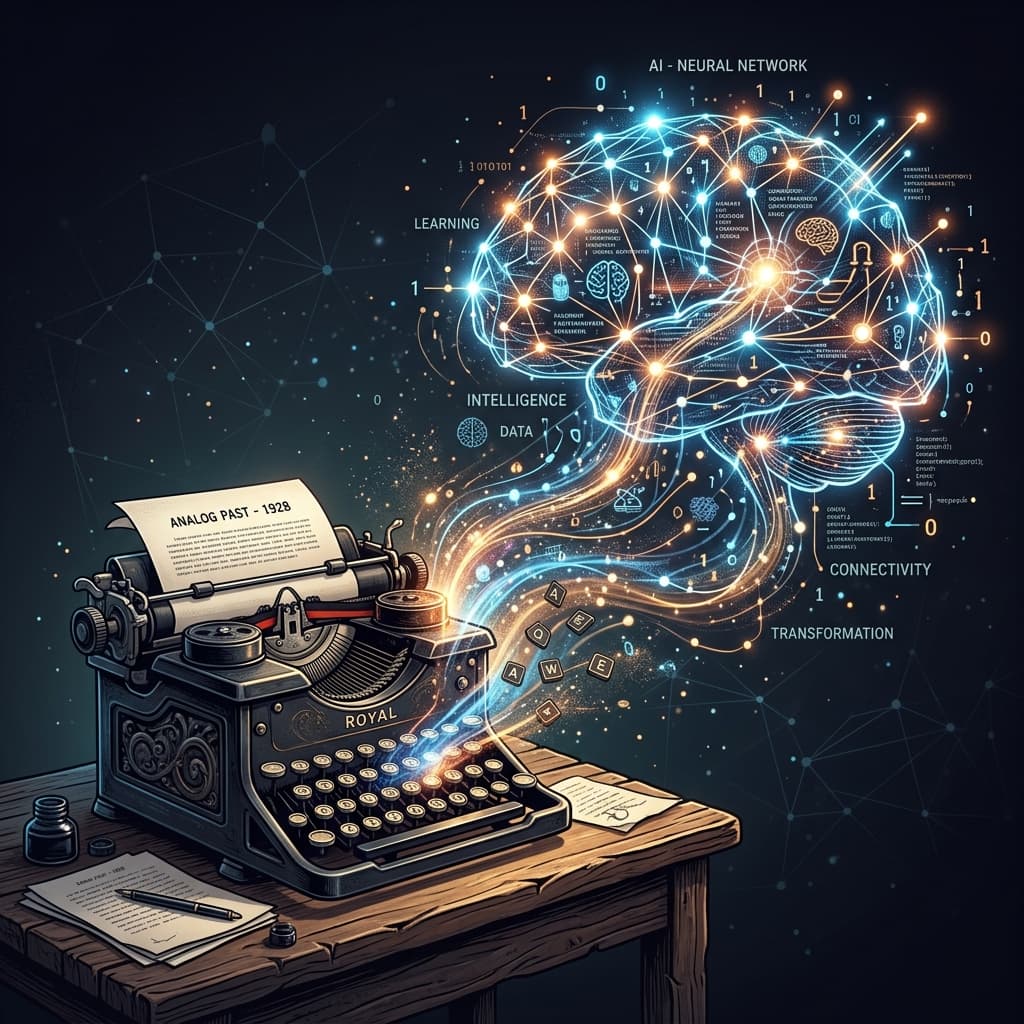
Everyone keeps asking whether AI will replace writers, as if the answer is a simple yes or no. AI is replacing bad writers. The good ones are getting faster, and here is what nobody tells you about the real impact on creative work.
The Panic Is Real, But the Premise Is Wrong
A Cambridge University study surveyed 258 published UK novelists in late 2025. Just over half, 51 percent, said AI would likely replace their work entirely. Thirty-nine percent reported income decline from generative AI. The fear is genuine.
Fear is not data, though. When photographers first saw cameras hitting the market in the 1800s, painters panicked too. They thought the machine would make art obsolete.
It did not. It killed the portrait miniaturists who painted the same pose for twenty coins. The artists who actually had something to say picked up a camera and started creating things no camera could do alone.
Writers are living through the exact same moment. The outcome will be identical.
What AI Actually Replaces
Let's be specific about what AI has already taken over. It kills commodity writing. The kind where someone pays $50 to write a 500-word blog post about "10 Tips for Better Time Management." The kind where a content mill churns out thirty SEO articles a week for a marketing agency that does not read them. The kind where the writer is essentially a text factory worker.
A Graphite study analyzed 65,000 English-language articles published between 2020 and 2025. They found that AI-generated content flooded the internet, but only 14 percent of top-ranking Google results were AI-generated. The algorithm still rewards human writing. The readers still prefer it.
HubSpot's research backs this up. Eighty percent of marketers report positive ROI from AI-assisted content writing. Yet 53 percent struggle to make their content stand out in an AI-saturated market. And 52 percent believe AI has made content creation so easy that it is actually less effective overall.
The paradox is obvious. AI made writing faster. That made bad writing cheaper. That made good writing more valuable.
Consider the Amazon KDP marketplace. In 2024, Amazon began flagging and removing books generated entirely by AI. Thousands of romance novels vanished overnight. The authors behind them were not novelists.
They were prompt engineers who never read a book in their lives. Amazon did not kill writers. It killed people who used writers as a job description without doing any of the actual work.
The Camera Analogy Nobody Wants to Hear
Here is the uncomfortable truth. AI is not a writer. It is a camera, plain and simple.
A camera does not replace photographers. It replaces the people who could not draw well enough to make a living from visual art. The camera democratized image creation.
It also created an entirely new craft. Photography became its own art form, with its own masters, its own techniques, its own standards.
AI is doing the same thing for writing. It democratized text generation. It also created a new craft. The craft of directing AI to produce something that actually means something.
Think about it. When you hand a camera to someone who has never photographed anything, they take terrible pictures. When you hand an LLM to someone who has never written anything with intention, they produce terrible text. The tool does not create the quality. The person behind it does.
A study from the International Labour Organization published in May 2025 found that generative AI replaces tasks, not jobs. Twenty-seven percent of tasks are automatable. Only 5 percent of actual writing jobs face displacement. The roles evolve. They do not disappear.
What Readers Actually Want
The data on reader behavior tells a clearer story than any industry prediction. A 2025 survey by the National Endowment for the Arts found that 68 percent of readers said they actively preferred books written by humans over AI-generated ones. Not 50 percent. Not 60 percent. Nearly seven out of ten.
People crave the human behind the words. When a writer shares a personal story about losing a parent, readers connect with the grief. When AI generates a story about grief, readers feel nothing. The words might be grammatically identical. The emotional resonance is completely different.
This is why only 14 percent of top-ranking Google results are AI-generated. Algorithms have learned what readers prefer, and readers prefer humans. The search engines themselves are voting for human writing.
The Writers Who Are Actually Losing Work
This is where the nuance matters. AI has absolutely destroyed entry-level writing gigs. The $20 blog posts, the generic product descriptions, the press releases that read like they were written by a committee of robots. If your entire skill set is "I can write a coherent paragraph," you are in trouble.
But that was never a real skill. That was literacy with a word processor.
The writers who are thriving are the ones who bring something AI cannot fabricate. Lived experience. Opinion. Voice. The ability to take a messy, contradictory, deeply human situation and turn it into prose that makes someone feel something.
Anthropic agreed to pay $1.5 billion to authors in September 2025 after being accused of training its models on pirated copies of their work. That is not a sign that AI is replacing writers. That is a sign that publishers and readers still value human writing enough to fight over it.
Why Good Writers Are Safer Than Ever
AI has raised the floor. Anyone can produce passable text in seconds. That sounds scary until you realize what it actually means.
Mediocrity is now free. That means the only thing that commands a premium is genuine quality.
Before AI, a client could not tell the difference between a decent writer and a great writer. They both sounded professional. Now, the AI baseline is decent. The great writer stands out by default.
This is the same dynamic that exists in every creative field. When Photoshop launched, graphic designers who only knew how to use a pen and paper panicked.
The ones who understood composition, color theory, and visual storytelling? They got promoted. The tool did not replace them. It amplified them.
rwrt exists for this exact reason. A Personal Persona lets you write with your actual voice instead of fighting between sounding human and sounding polished. The tool handles the polish. You handle the thinking. That is the new division of labor.
The Real Threat Is Not AI. It Is Indifference.
The writers who lose to AI are not the ones who write badly. They are the ones who stopped caring about what they write.
AI cannot replace curiosity. It cannot replace the writer who spends three hours calling a source because the email interview did not give them what they needed. It cannot replace the person who rewrites a sentence seven times because the sixth version was close but not quite right.
AI generates text. Writers generate ideas. These are fundamentally different activities.
A researcher at Stanford's AI Index noted in their 2025 report that AI excels at pattern replication. It takes everything that already exists and remixes it.
That is impressive engineering. It is not creativity. Creativity requires a point of view. It requires the willingness to say something that has not been said before.
How to Future-Proof Your Writing Career
You do not need to learn prompt engineering. You need to get better at being a writer.
Read more than you write. The best writers are voracious readers who have absorbed enough language patterns to generate original thoughts. AI has read everything too. The difference is that you actually experienced some of it.
Specialize in something AI cannot fake. First-hand reporting. Deep domain expertise. Opinion pieces backed by actual experience. The more specific your knowledge, the less relevant AI becomes.
Use AI as an editor, not an author. Run your drafts through it for structure suggestions, grammar cleanup, or angle brainstorming. Then rewrite everything in your own voice. rwrt makes this workflow seamless by learning your Personal Persona and maintaining consistency across every piece you produce. Download it on the App Store.
Track your writing output. Keep a log of everything you publish and measure engagement, not word count. The writers who survive the AI era are not the ones who write the most. They are the ones who write with the most intention.
Build a readership, not a portfolio. A portfolio impresses clients. A readership sustains a career.
The difference is that readers come back for you specifically. They do not care about the tool you use. They care about the perspective you bring.
Write every day, even when you do not feel inspired. Inspiration is a myth sold by people who never had deadlines. Discipline beats motivation every single time, and AI cannot replicate the discipline of showing up consistently.